
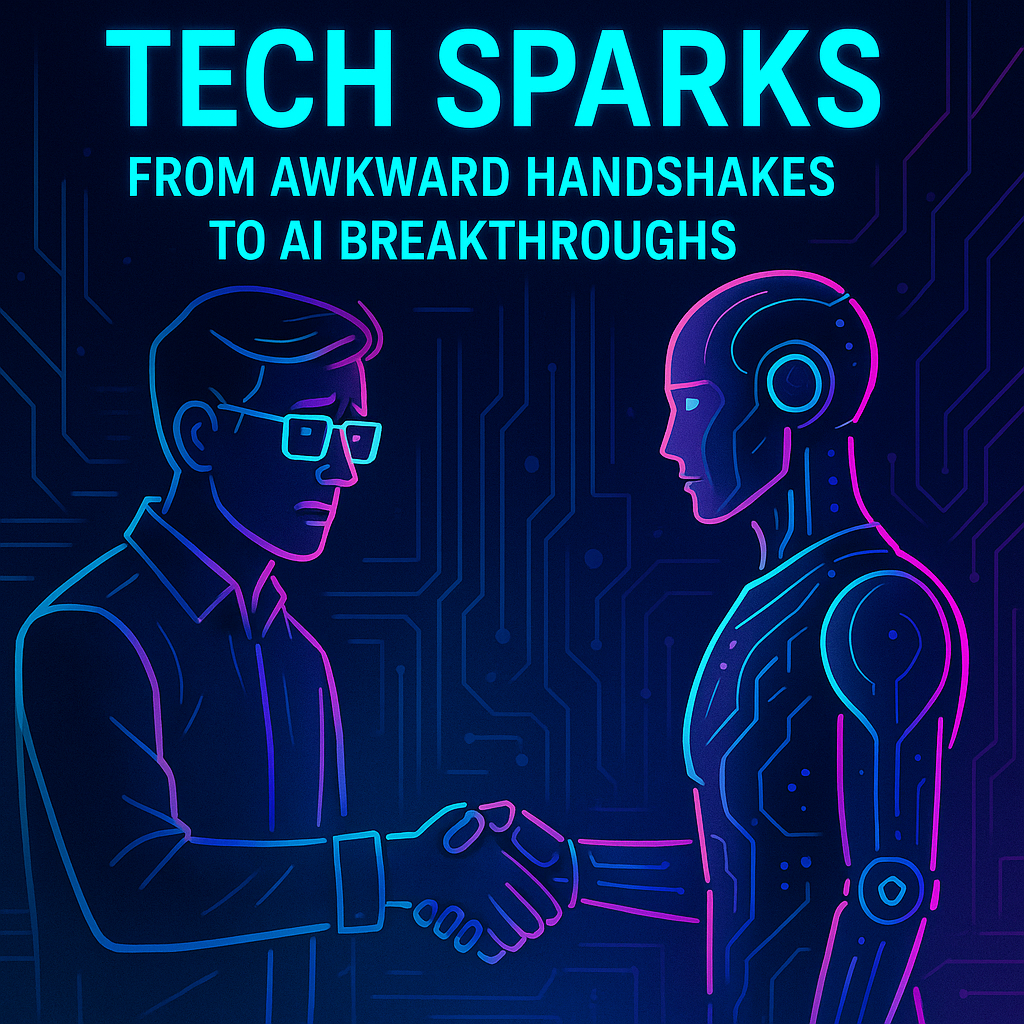
The Awkward AI Handshake That Sparked a Buzz
This morning I couldn’t help but chuckle at the latest tech drama from the India AI Impact Summit. It turns out that, amidst what was meant to be a moment of unity, OpenAI’s Sam Altman and Anthropic’s Dario Amodei ended up in a rather awkward “handshake refusal” (more like a dodge) that has since gone viral. According to a Reuters update, the photo op turned into a subtle power play between two of the biggest names in AI. Even though Altman later explained, rather sheepishly, that he was “confused” when the PM grabbed his hand, the incident speaks volumes about the ongoing rivalry in our industry. For us designers, it’s a reminder that even in tech, things can get personal in the most unexpected ways!
This kind of industry theatre not only makes for great memes (ever seen Silicon Valley and thought “that could be us”?), but it also signals a shift towards a more competitive AI landscape. It’s an interesting insight into how leadership dynamics might one day influence the digital products we design.
Google’s Gemini 3.1 Pro: A Boost in AI Reasoning
On a more technical note, Google recently dropped some exciting news about their latest AI model – Gemini 3.1 Pro. As highlighted in Google’s official blog post, the model achieved a significant jump in reasoning performance, scoring an impressive 77.1% on the ARC-AGI-2 benchmark. What does this mean for us in the design space? Simply put, as these AI systems become smarter and more reliable, they’re set to transform how we approach problem-solving, prototyping, and even research.
Whether it’s through enhanced competitive coding or smarter creative tools, this upgrade might soon offer us designers a more intuitive partner in our digital product design workflows. It’s exciting (and a bit daunting) to think that a tool like Gemini 3.1 Pro could soon be integrated into our daily toolkit.
Innovative Workflows: Crafting YouTube Scripts with NotebookLM
Have you ever wished you had an extra set of hands – or, more aptly, a brain – to help generate ideas for your projects? Well, look no further than NotebookLM. A recent guide outlined the process of using NotebookLM to “watch” and dissect long-form YouTube videos, then transform that structure into fresh video outlines and scripts. You can check out the detailed steps here.
This workflow is not only a clever way to ramp up creative content but also a fantastic tool for designers looking to tell a compelling digital product story. By reverse engineering the narrative and applying it to your brand, you have an opportunity to communicate your design insights in a more engaging, accessible format.
Embracing AI: A Lesson in Adaptation and Leadership
On the business front, there’s a noteworthy trend from corporate giant Accenture. They’re now tying senior leadership promotions to weekly AI tool usage – a strategy aimed at getting veteran staff to adopt AI more enthusiastically. As highlighted in an article on the Financial Times, this move underlines the pressing need for continuous learning in today’s fast-evolving tech landscape.
For design professionals who are also aspiring business leaders, this is a clear signal: staying on top of AI trends isn’t just for the techies anymore. Whether it’s through better user interface innovations or more efficient digital product design, embracing these tools can lead to tangible career benefits. It certainly encourages us to rethink our strategies and maybe even brush up on our own AI skills.