
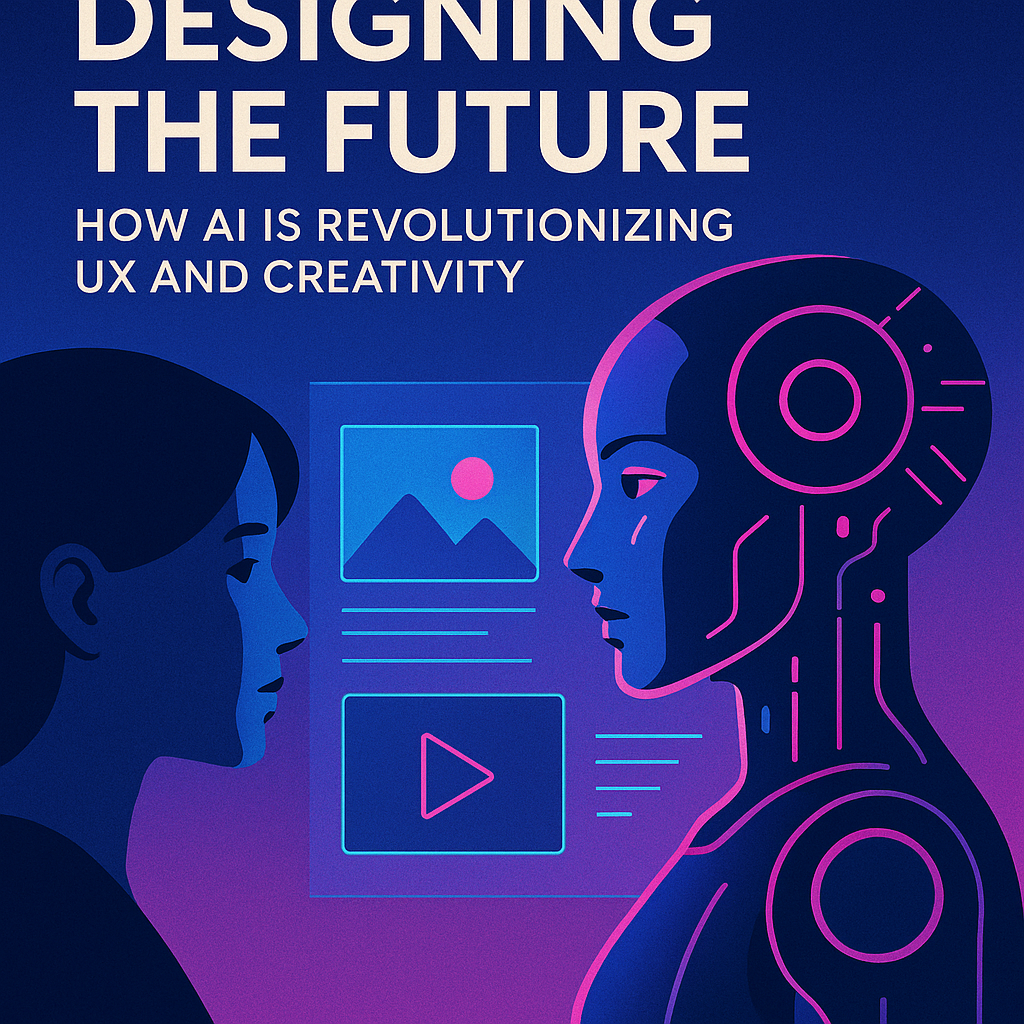
AI’s Bold New Frontier and Design Implications
This morning, I was reading about xAI’s shake-up after its SpaceX merger and couldn’t help thinking about the crossover between audacious AI ambitions and our world of design. Elon Musk’s announcement of a revamped team structure and plans (yes, even lunar data centres!) highlights how even the most technical AI projects can spark fresh design challenges and opportunities. For us UX designers, it’s a reminder that when products aim high, the interfaces and user interactions must be engineered to scale in equally imaginative ways. Check out the details on xAI’s update at xAI’s official post.
While Musk’s ambitions may sound like science fiction, they prompt us to work on designs that are both futuristic and practical—balancing solid UX with innovative technology solutions.
Voice-First Interfaces: Transforming UX
I’ve also been exploring the new wave of voice-native AI tools. Modulate’s Velma 2.0, for instance, is redefining what it means to interact with digital products. Instead of simply transcribing speech, Velma decodes intent, emotion, and authenticity from conversations, offering real-time insights (imagine the potential in voice-driven interfaces!). This could alter how we design interactions, making them more intuitive and human-centred. More on Velma can be found by visiting Modulate’s site.
These advancements push us to rethink voice user interfaces (VUIs) and incorporate conversational nuances into our design frameworks. It’s an exciting development that blends technology with the art of storytelling in UX.
Open-Source AI Tools: A Designer’s Playground
Another noteworthy update comes from Z.ai’s launch of GLM-5, a 744B-parameter model now open-sourced to the community. As a designer, I see this as a call to experiment with backend AI that could empower smarter design assistants or even automate parts of our workflow. Open-source models like GLM-5 are paving the way for affordable AI integrations, which means more resources for iterative design improvements and user testing. Explore GLM-5 further on Z.ai’s blog.
This democratization of AI tools can be a game-changer for digital product design—enabling us to prototype and test user interactions more dynamically, saving time and boosting creativity.
From Onboarding Docs to Talking-Head Training Videos
Lastly, I was intrigued by a practical tip on transforming standard operating procedure documents into engaging training videos using AI avatars. The process involves converting text-based docs into lively, talking-head formats with tools like Synthesia.io. For designers working in digital product design, this method not only enhances onboarding but can also be repurposed to explain complex UI updates or design systems to diverse teams. Learn more about this technique here.
It’s a straightforward yet effective reminder that our work extends beyond pixels and prototypes—it’s also about communication, education, and continually refining how we share ideas.