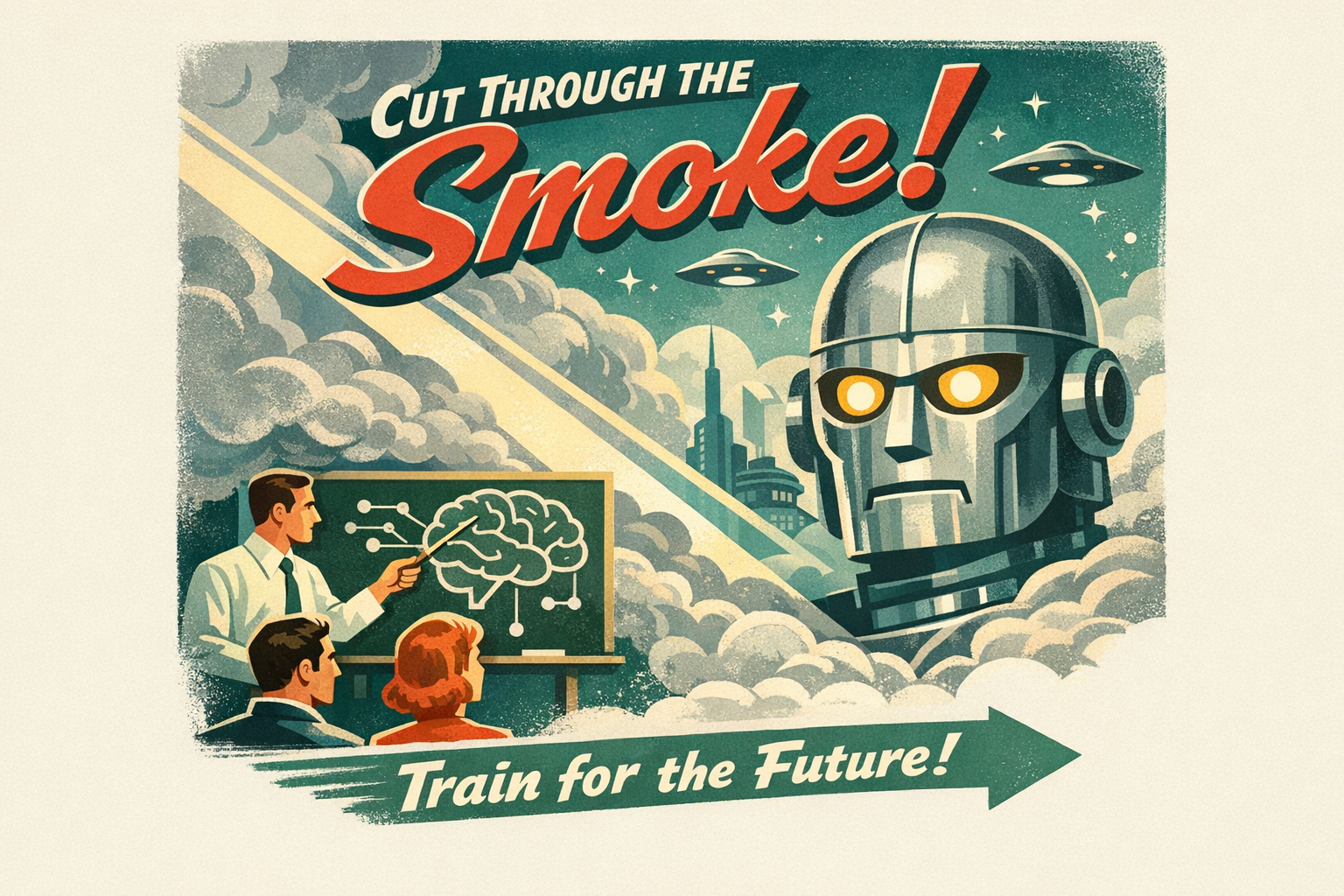
Cut Through the Smoke: Rethinking AI Concerns
I’ve been mulling over some of the recent discussions on AI, especially after reading Jeremy Utley’s thought-provoking piece, “Real Concerns, Wrong Conclusion” (read here). The article highlights common AI worries that keep cropping up in industry Q&As – cognitive offloading, homogenisation, and sycophancy. What struck me was that these concerns often serve as a smoke screen for inaction rather than reasons to halt progress.
For many of us in UX and digital product design, it’s easy to get caught up in scepticism. But rather than using these concerns as excuses, we should be treating them as challenges to overcome. The takeaway? An uneducated use of AI is the real danger, not AI itself.
Learning by Doing: An AI Drivers Ed Approach
Jeremy draws a brilliant parallel between driving and AI usage. Just as we don’t expect everyone to cycle to work despite cars being dangerous, we shouldn’t shy away from AI simply because it comes with risks. Instead, we need a bit of “drivers ed” – the sort of deliberate, hands-on training that builds competence over time.
This means actively engaging with AI tools in our design process, experimenting with inputs, and learning through real-world application. If you’re investing in AI licences for your team, consider structured practice sessions, feedback loops, and ongoing training rather than just handing out keys and expecting miracles. Just as you wouldn’t let someone drive off after a one-hour theory lesson, you shouldn’t expect immediate mastery of AI without proper guidance.
Actionable Advice for Design Leaders and Practitioners
So, what can we do to keep moving forward? Here are a few practical takeaways:
- Embrace the Learning Curve: See each new AI challenge as a puzzle to solve. Instead of asking, “What about sycophancy?” to justify inaction, ask “How do I teach my tools to deliver truly helpful feedback?”
- Set Up Regular Training: Create forums like a weekly call or community of practice. If your team’s AI rollout involves nothing more than a one-off workshop, you’re only scratching the surface.
- Lead by Example: For design leaders rolling out AI, remember that your role doesn’t end at procurement. Engage with the tool, experiment openly, and share your learnings with your team.
Jeremy even shares a glimpse into his own approach – starting from the curiosity in the Q&A to setting up a structured AI Bootcamp (find out more here). His story is a reminder that our learning journey is continuous, and the best breakthroughs often begin by challenging our own preconceptions.
At the end of the day, AI is a tool – powerful yet complex. It’s up to us to guide it, critique it, and ultimately harness it to design better digital experiences. So, keep questioning, keep experimenting, and remember: the real progress comes when we choose to learn rather than to stand aside.