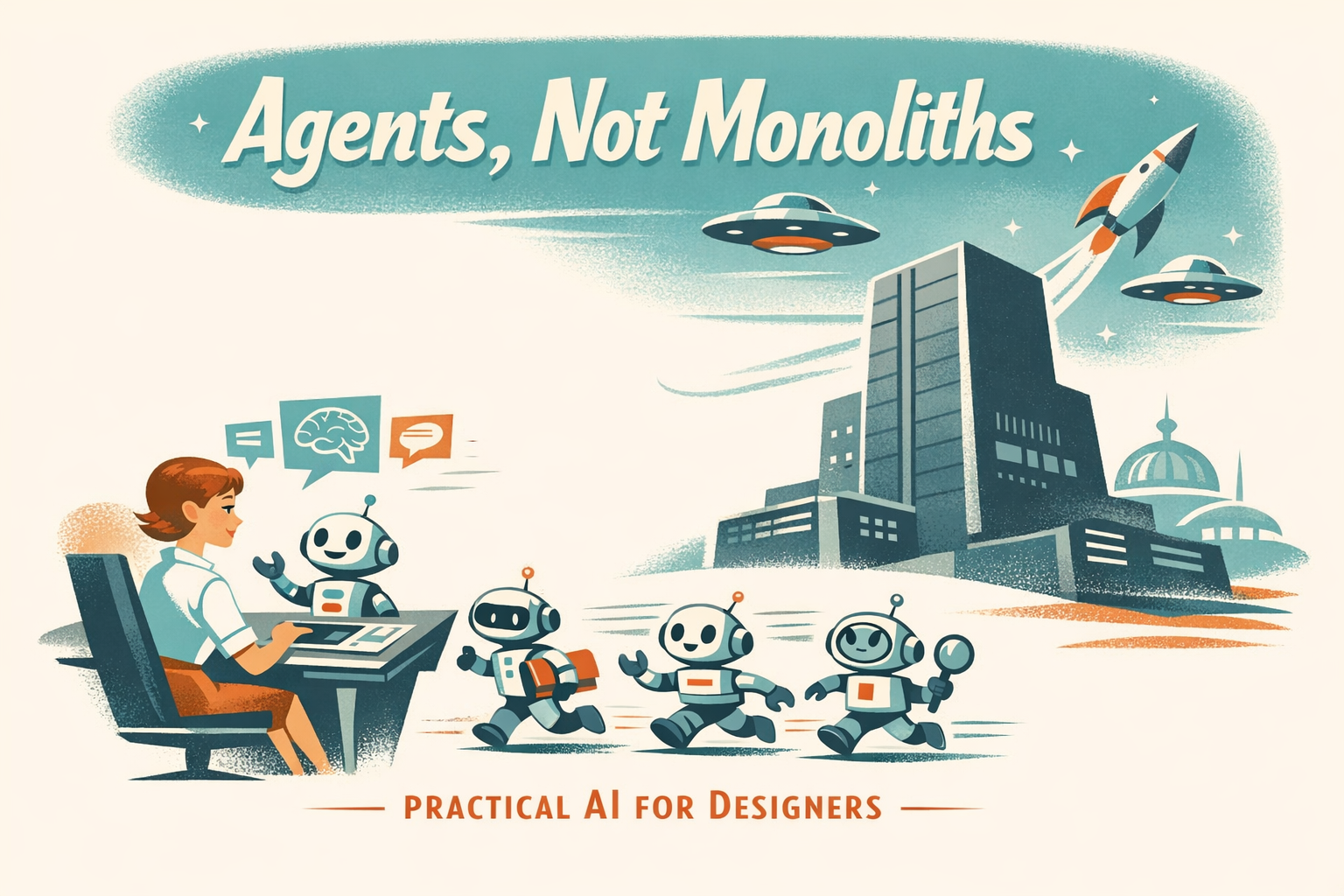
Agent-first design tools are changing how we build
I’ve been sifting through the latest newsletters this morning, and the trend is clear: agent-first design tools are no longer fringe experiments. BB is getting a lot of love as a new, extendable app that turns any chat/AI model into a lightweight IDE you can tailor with plugins. (I’m impressed by how fast it setup on mobile—4 seconds, if you’re counting.) More on BB.
The tech is built around Pi’s minimalist, extensible coding harness—so the agent can even build its own tools. Prime Agent is another example, a self-improving harness for long-running tasks. Together, they’re nudging design work toward tiny, widget-like capabilities that you can expand as you learn what you need. Prime Agent.
Concluding thought: the days of preferring one monolithic tool are fading. Designers will want adaptable, multi-model workflows that can switch models and harnesses as needed, rather than being locked in.
AI-powered workflows you can actually use
Today’s updates show AI stepping into our day-to-day work, not just research. Atlas by WorkOS acts as an AI teammate in Slack, taking actions and learning how your company operates. Atlas details.
Other tools are maturing, like Muse Code (Meta’s Muse Spark 1.2) that brings coding enhancements into chat, Context.dev, an API that turns live web data into structured input for agents, and Gemini Notebook now lets you produce slides and quizzes directly from chat. Muse Code, Context.dev, Notion results, Gemini Notebook.
And for safety and interpretability work, Goodfire AI’s Silico is now generally available for researchers. It’s a reminder that as we ship more capable tooling, we should also invest in understanding and governance. Silico.
Concluding thought: these tools are thinning the line between idea and artefact. They’re not just fancy toys; they’re practical helpers for rapid prototyping and collaboration—if you pilot them with care.
Big industry moves that shape how we design products
Corporate shifts are reshaping the tech landscape we design in. Bending Spoons is acquiring Airtable, with Airtable’s new AI business spun out as Hyperagent. It’s a clear signal that data and automation are becoming core to product workflows, even as some AI units diverge. Airtable deal.
Google’s long-time chief scientist Jeff Dean is leaving to launch Discovery Loop, a lab focused on automating ML research, hinting at future organisational shifts around AI R&D. Dean departure.
Cloudflare is pushing agent-first tooling—Cloudflare OS, Agent Tracing, and Wallet—while small-model safety progresses with Shieldstral on-device. If you’re thinking about governance and costs, these are the kinds of shifts that matter for design systems and cross-team tooling. Cloudflare OS, Shieldstral.
Concluding thought: keep an eye on ecosystems—acquisitions, leadership changes, and on-device options will shape how teams collaborate and scale their AI design work.
Practical tips for designers: what I’m testing next
Ben’s Bites-style thinking is loud and clear: the pool of builders is expanding, and AI lowers the bar to create tools for ourselves and others. “You cannot make the masses want an automation flow when they want to hang out w/ their friends and not think about their job,” as one X post puts it. automation flow quote.
My plan? start small with widget-like workflows—to-do lists, emails, and feed readers—that can be extended later with plugins or new models. The aim is to avoid vendor lock-in, test with real users, and share learnings so others can copy or adapt. It’s about practical experiments, not overnight revolutions.
Concluding thought: embrace lightweight experimentation, document outcomes, and look for opportunities to improve collaboration with AI—without overhauling your entire stack. Type collaboration.